
Radon Testing in Denver & the Front Range
Radon is invisible, odorless, and common in Colorado. The only way to know your home's level is to test. Certified 48-hour testing with clear, actionable results.
Colorado is one of the highest radon states in the country
Living at altitude gets the attention, but the bigger invisible risk is under your foundation. Here is why testing along the Front Range is not optional.
About half of Colorado homes test high
Colorado sits on uranium-rich granite and is EPA Radon Zone 1, the highest potential zone in the country. State health data shows roughly 1 in 2 homes here test above the EPA action level.
The second leading cause of lung cancer
The EPA attributes about 21,000 lung cancer deaths a year in the U.S. to radon. It is the leading cause of lung cancer among non-smokers.
You can't see, smell, or taste it
Radon is a radioactive gas released by natural uranium decay in soil. It seeps in through foundation cracks, sump pits, and crawl spaces and builds up indoors. Testing is the only way to know.
Any home, any age, any foundation
New builds, century-old Victorians, slabs, basements, crawl spaces. Your neighbor's low reading tells you nothing about your home. Levels vary house to house.
Sources: U.S. EPA radon information and the Colorado Department of Public Health & Environment radon program .
How a radon test works
Book in a couple of minutes
Schedule online or call. Radon testing can be added to any home inspection or booked on its own, whether you are buying, selling, or just staying put.
A continuous monitor runs for 48 hours
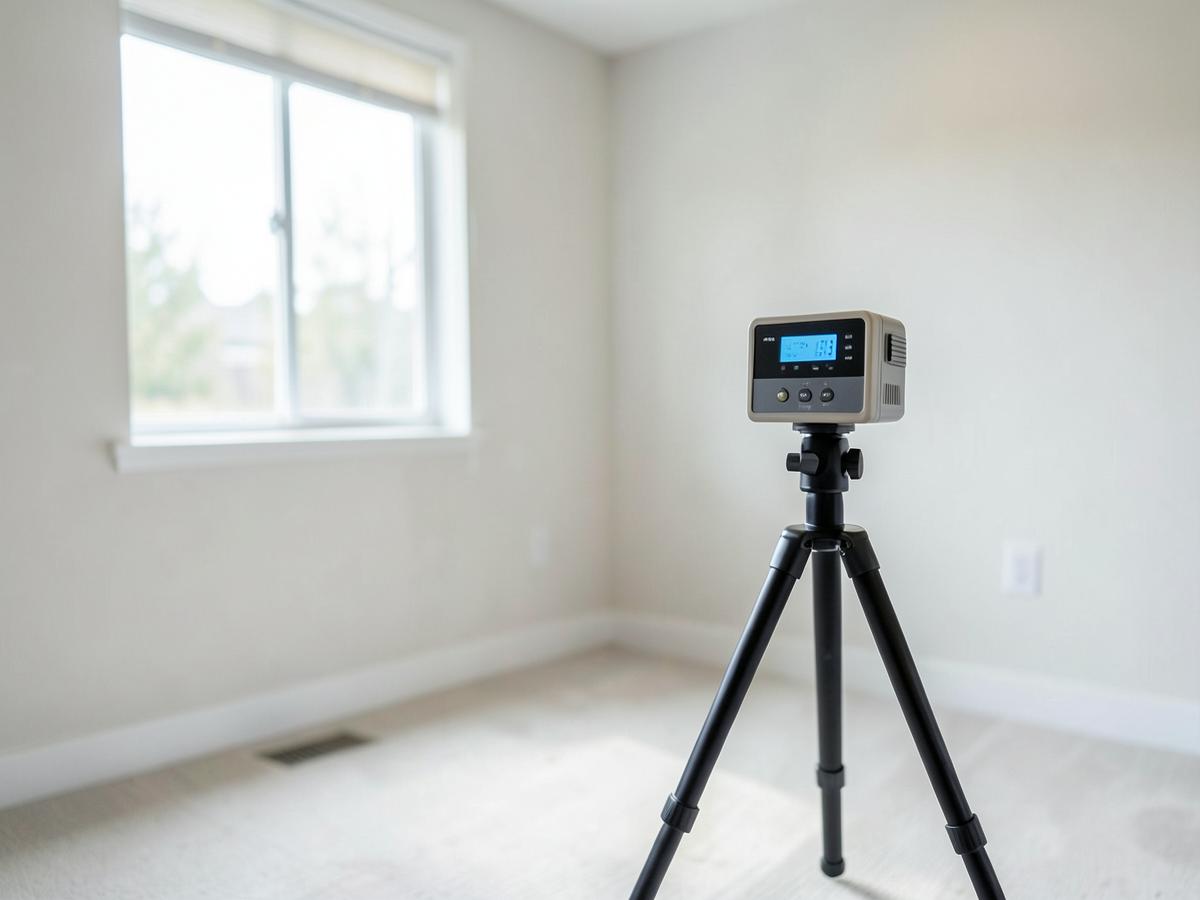
I place a calibrated continuous radon monitor in the lowest livable level of the home. It samples hourly and records a full picture, not a single snapshot. The home stays under closed-house conditions during the test.
You get a clear report fast
Results come back quickly with your average level in pCi/L, hourly readings, and a plain-English explanation of what it means and what to do next.
What the numbers mean
Radon is measured in picocuries per liter (pCi/L). There is no completely risk-free level, but the EPA sets clear guidance on when to act.
Below 4.0 pCi/L
Below the EPA action level. No mitigation required, though the EPA notes levels between 2.0 and 4.0 still carry some risk and mitigation can be worth considering. Retest every few years or after major renovations.
4.0 pCi/L or higher
At or above the EPA action level. The EPA recommends mitigation. The good news: a standard mitigation system is a routine fix, usually reduces levels by a large margin, and most systems cost roughly the price of a water heater install.
Pricing, plain and simple
- Radon test with a home inspection$165
- Standalone radon test$185
- NRPP certified radon measurement professional
- Calibrated continuous monitor, hourly readings
- Fast, clear report you can share with agents or buyers
- Guidance on next steps if levels come back high
Radon testing FAQ
I'm buying a home. When should the radon test happen?
As early in your inspection window as possible. The monitor needs about 48 hours in the home, so I typically drop it off ahead of or at the start of the inspection period so results land before your objection deadline.
Do new homes need radon testing?
Yes. Radon comes from the soil, not the structure, so a brand new build is just as likely to have elevated levels as a 100-year-old home. Many Colorado builders now install passive radon systems, but passive does not mean zero. Test to confirm.
The home already has a mitigation system. Should I still test?
Absolutely. Systems can fail, fans wear out, and many were never verified after installation. A 48-hour test confirms the system is actually doing its job.
Can't I just use a DIY test kit from the hardware store?
Short-term charcoal kits are a fine first screen for homeowners, but for a real estate transaction you want a certified professional with a calibrated continuous monitor: tamper-resistant, hourly data, and results that hold up in a negotiation.
What if my levels are high?
Don't panic, and don't walk away from a house you love. Radon mitigation is a well-understood fix: a sub-slab fan system, usually installed in a day, that reliably brings levels down. Your report will explain exactly what the reading means and what to ask for.
Do you test outside Denver?
Yes. I cover the entire Front Range, from Ft. Collins through the Denver metro down to Colorado Springs. Same price, same certified process.
Know your number. Book your radon test today.
A 48-hour test and a clear answer, from a certified professional with 165+ five-star Google reviews.